Insulation Innovations: Beyond Fiberglass
The shift towards passive house standards and net-zero energy buildings has placed immense pressure on the thermal envelope. The goal is no longer just adding bulk; it is about maximizing thermal resistance (R-value) while managing moisture transport and minimizing embodied energy.
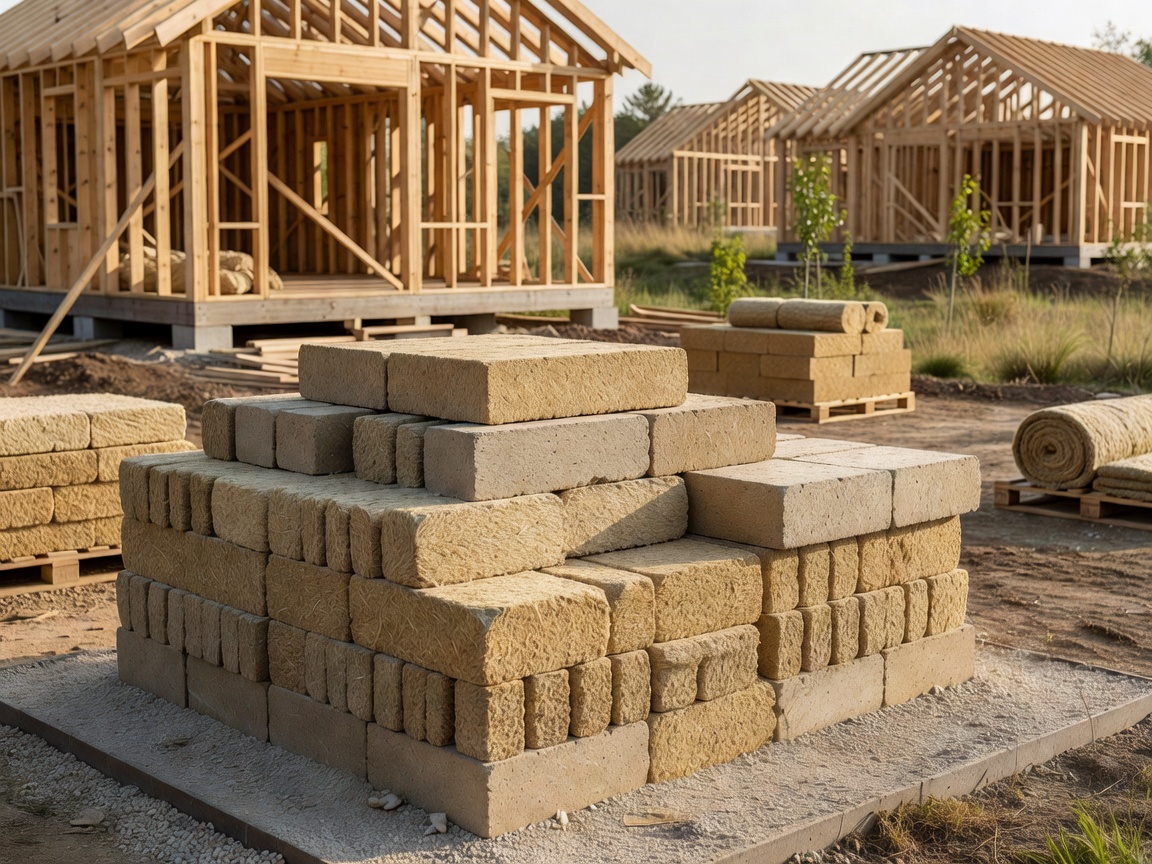
Hempcrete: Bio-composite Thermal Mass
Hempcrete is a bio-composite material made from the inner woody core of the hemp plant mixed with a lime-based binder. While it is not a structural load-bearing material, it acts as a phenomenal insulator and moisture regulator. Because it is vapor-permeable, it actively manages indoor humidity, preventing mold. Furthermore, the lime absorbs carbon dioxide as it cures, making the material highly carbon negative.
Aerogels: Space-Age Insulation
For scenarios where space is at an absolute premium—such as retrofitting historic buildings where wall thickness cannot be expanded—aerogels provide the answer. Originally developed for aerospace applications, silica aerogels have the lowest thermal conductivity of any known solid. Even a thin blanket of aerogel insulation can out-perform inches of traditional mineral wool or polyisocyanurate.
Eliminating Thermal Bridging
Insulation is only as good as its weakest link. Thermal bridges occur when highly conductive materials (like steel studs or concrete balconies) penetrate the insulation layer, acting as a highway for heat loss. Modern structural design utilizes specialized thermal break plates and continuous exterior insulation strategies to completely encapsulate the structural frame.