Exterior Cladding: Defending the Envelope
Cladding serves a dual purpose: defining the architectural vernacular of a building and protecting the delicate thermal envelope beneath from bulk water, UV degradation, and wind loads. The physics of modern facades almost exclusively relies on the rainscreen principle.
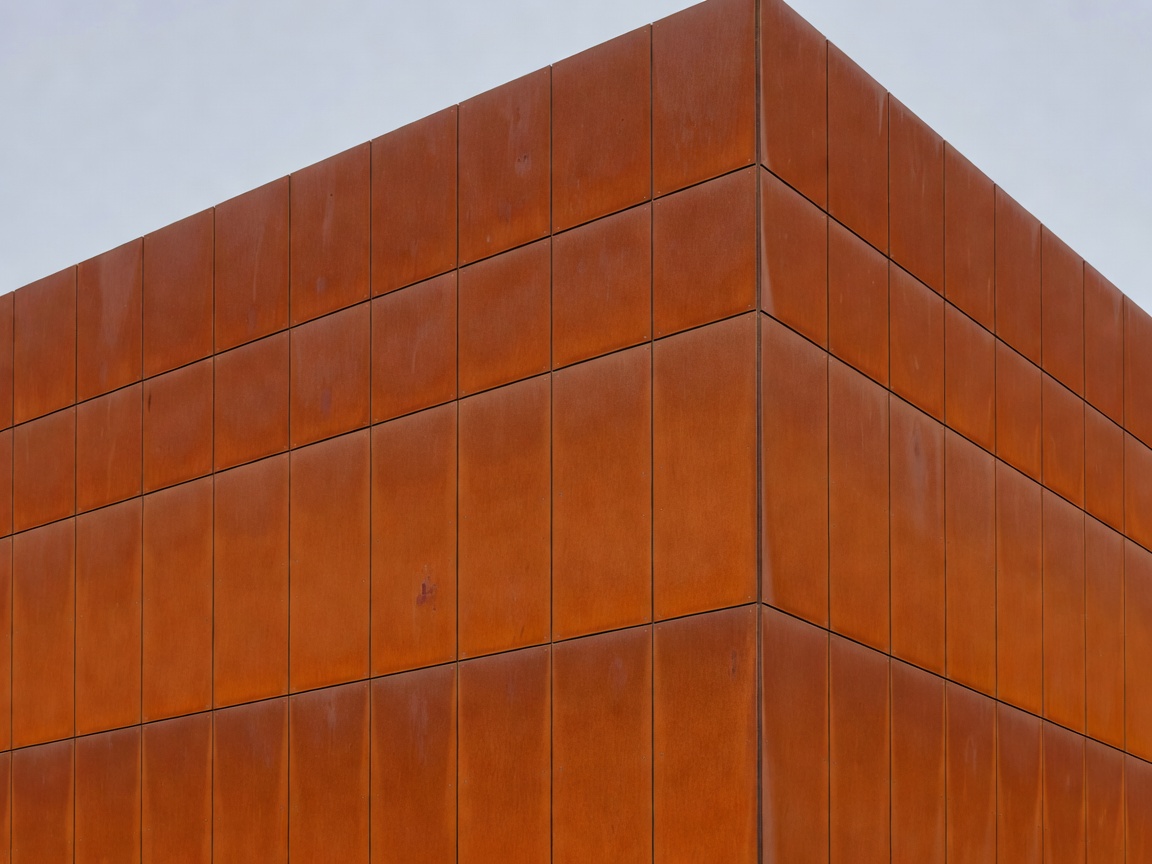
Weathering Steel (Corten)
Weathering steel, often referred to by the trademark Corten, is an alloy designed to form a stable rust-like appearance after exposure to weather for several years. This oxidation layer essentially acts as a protective barrier, preventing deeper rust and eliminating the need for painting. Its distinct terracotta-like hue provides striking visual contrast, particularly in rural or heavily landscaped settings.
Terracotta Rainscreens
Terracotta is one of the oldest building materials, yet when engineered as hollow-core extruded panels mounted on aluminum tracks, it represents the cutting edge of facade design. Terracotta rainscreens are non-combustible, highly resistant to UV fading, and offer substantial thermal mass. They allow for intricate profile designs that can manipulate shadow and light across a massive elevation.
Ventilated Cavities
The core mechanic of any modern cladding system is the ventilated air cavity behind the panels. When wind-driven rain penetrates the joints of the cladding, gravity pulls the water down the back of the panel to weep holes, while the upward flow of air within the cavity dries out the weather-resistant barrier applied to the structural wall. This dynamic system ensures longevity and prevents trapped moisture from causing rot.